


Overview
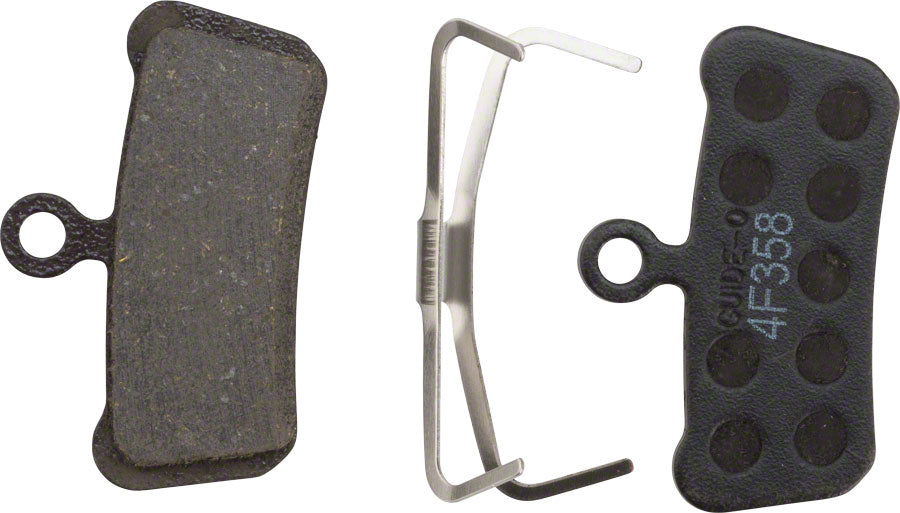
SRAM's own replacement pads for its G2, Guide, Trail and Level Stealth 4-Piston brakes, the pad SRAM calls Medium in its pad identification chart. Each kit holds two pads with the spreader spring, pad pin and clip.
Choose the compound: organic is the quiet one with a strong first bite, and sintered is the heavy-duty one for wet, muddy riding and long descents. Both have a steel back plate.
Will it fit my brakes?
Disc pads come in many shapes, and a pad only fits the calipers it was made for. Find the model name on your brake caliper or lever and check it against the list in the table. If your brake is not on the list, these pads will not fit, even if they look close. Not sure? Bring the bike or the old pads to any of our three stores and we will match them, and our service team can install them for you.
Questions
Organic or sintered: which should I choose?
Organic pads, also called resin pads, are quieter, smoother and gentler on the rotor. Sintered (metal) pads last longer and hold up better in wet weather and on long descents, but they are usually louder. Some rotors are marked for resin pads only, and sintered pads wear those rotors out quickly, so check your rotor before you switch.
How do I know my pads are worn out?
Look into the caliper or take the pads out. Replace them when the braking material is thinner than the metal plate behind it. If you hear grinding when you brake, stop riding and replace them right away, since that is metal on the rotor.
Do new pads need breaking in?
Yes. Before your first ride, make a series of firm, controlled stops from a moderate speed until the brakes feel strong and steady. Keep oil, chain lube and cleaning sprays away from pads and rotors: a contaminated pad squeals, loses power and has to be replaced.
Specifications
| Compound |
| Organic |
| Sintered |
| Fits | SRAM Level Stealth 4-Piston, G2, Guide and Trail |
| Backing plate | Steel |
| Cooling fins | No |